
What Happened in Whiteland
The Whiteland Town Council voted 3–2 against signing a purchase agreement for Flock Safety automated license plate reader (ALPR) cameras, meaning the town will not move forward with installing the cameras under the proposed contract, according to reporting by Elissa Maudlin of the Daily Journal of Johnson County (republished by Indiana Economic Digest).
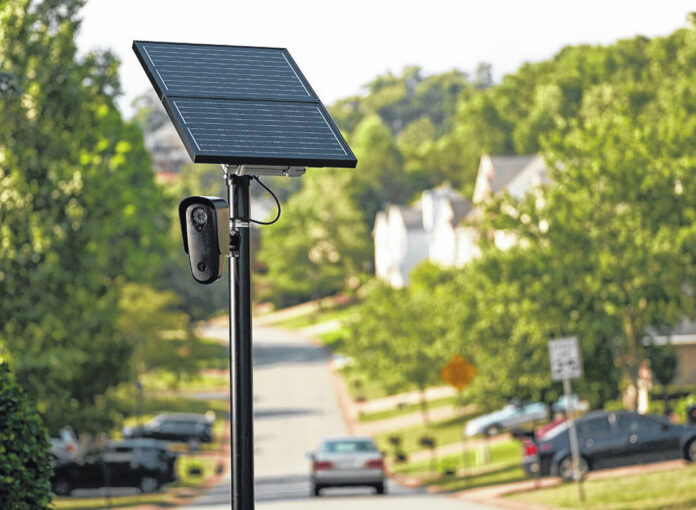
The agreement would have added Flock cameras along Whiteland Road between Warrior Trail and Bob Glidden Boulevard, near a planned roundabout project expected to begin construction in the spring. The cameras discussed were described as moveable and solar-powered.
The Vote
According to the report, council members Tim Brown, Brad Goedeker, and Joe Sayler voted against the agreement. Council President Richard Hill and Vice President Deb Hendrickson voted in favor.
What the Contract Would Have Included
Town Manager Carmen Young told the council the proposal priced the cameras at $3,000 per camera per year and included a two-year subscription. The subscription would have allowed the Whiteland Police Department to access license plate reader data from cameras “all across the country,” as described in the report.
The planned Whiteland deployments discussed at the meeting included coverage for westbound traffic near Warrior Trail and Whiteland Road, and eastbound traffic near one of the Amazon entrances. Young said the placements were intended to remain outside construction limits for the roundabout project.
Why Police Supported It
Whiteland Police Chief Derek Cox argued that ALPR access helps solve property crimes and assists with investigating hit-and-run crashes. Cox also said the department responds to multiple hit-and-run incidents per day at truck stops and along the interstate, and he connected local demand for investigative tools to activity near large logistics facilities such as Amazon and DHL.
Cox said ALPRs can help in situations where officers cannot physically monitor many intersections at once and allow investigators to look back for vehicle leads after incidents occur.
Why Council Members Opposed It
Opponents emphasized concerns about creating or participating in a broad database that can be accessed by many agencies, and about routine monitoring of drivers who are not suspected of a crime.
In the report, Brown and Sayler raised concerns about the idea of a private company operating a database that law enforcement pays to use, and about government surveillance of people who are not the subject of an investigation. Goedeker expressed hesitation about expanding oversight or monitoring of motorists absent a specific investigation.
Funding and Next Steps
The report notes one proposed funding path: a $10,000 donation from Sugar Foods associated with a tax abatement for a new facility in Whiteland. Even with that option, the council did not approve the contract.
Hendrickson proposed signing the agreement and revisiting it after two years if the town was dissatisfied with the subscription, but the motion failed on the same 3–2 split described above.
Without a signed purchase agreement, the report states that Whiteland will not install the Flock cameras under this proposal, even though funding for the cameras had been approved as part of the roundabout project planning.
What This Reveals About the Indiana ALPR Debate
Whiteland’s debate reflects a recurring tension across Indiana: local officials and police are being asked to decide whether to adopt powerful vehicle-tracking tools, while broader questions about retention, sharing, audit logs, and public transparency are often addressed inconsistently from town to town.
Eyes Off Indiana’s Position
Eyes Off Indiana supports implementing statewide safeguards that include:
- Short retention periods for non-relevant vehicle data,
- Probable-cause standards for historical searches,
- Clear access controls and cybersecurity requirements,
- Public reporting and independent audits,
- A prohibition on commercial or third-party sharing.
These measures protect both safety and civil liberties by limiting unnecessary long-term tracking and reducing the risk of misuse.
Take Action
Help establish statewide privacy protections for ALPR systems in Indiana: