
A data report by Eyes Off Indiana. Data current as of July 1, 2026. All figures in this report are reproducible from public data; see Data and Methods and Data Availability below.
Abstract
Automated license plate readers (ALPRs) photograph and log every passing vehicle, creating searchable records of driver movements. To measure the scale of this infrastructure, Eyes Off Indiana analyzed every ALPR camera location recorded in OpenStreetMap — the crowdsourced dataset behind the DeFlock mapping project — as of July 1, 2026. We identified 110,198 mapped ALPR cameras in the United States, which we assigned to states and to Indiana counties using US Census Bureau boundary files, land areas, and population estimates.
Three findings stand out for Hoosiers:
- Indiana ranks 9th among the 50 states in total mapped ALPR cameras (about 3,000), despite ranking 17th in population — behind only California, Texas, Florida, Georgia, Illinois, Ohio, New York, and Michigan.
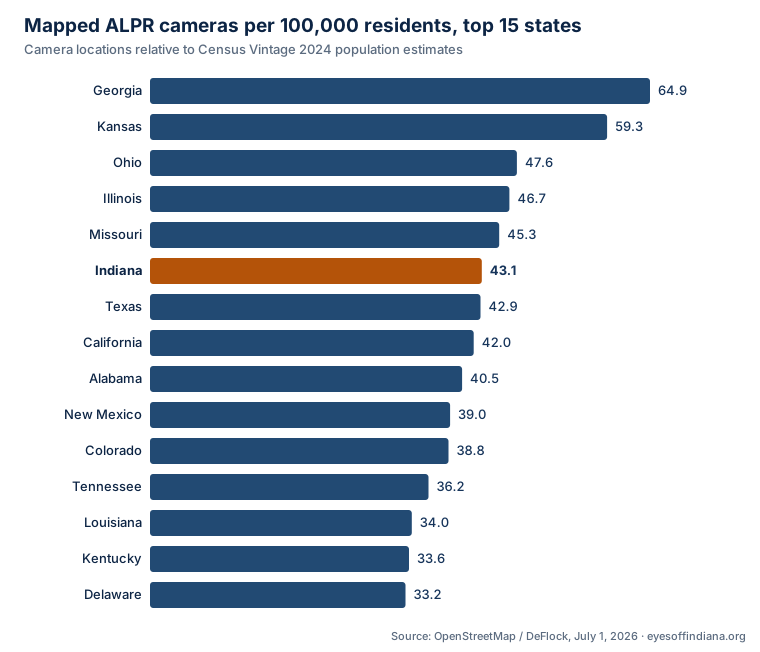
- Indiana ranks 6th per capita, with 43.1 mapped cameras per 100,000 residents — roughly one third higher than the national rate of 32.1.
- Cameras are documented in 84 of Indiana's 92 counties. Marion County alone accounts for 509 cameras (16.8% of the state total), but the highest per-capita rates appear in small rural counties: Blackford County records 11.0 cameras per 10,000 residents, the highest rate in the state.
Key Findings at a Glance
| Measure | Value |
|---|---|
| Mapped ALPR cameras, United States | 110,198 |
| Mapped ALPR cameras, 50 states | 109,118 |
| Mapped ALPR cameras, Indiana | 3,025 |
| Indiana rank, total cameras | 9th of 50 |
| Indiana rank, cameras per 100,000 residents | 6th of 50 (43.1; US rate: 32.1) |
| Indiana rank, cameras per 1,000 sq mi | 11th of 50 (83.3; US rate: 30.9) |
| Indiana counties with at least one mapped camera | 84 of 92 |
| Median Indiana county | 14–15 cameras |
| Top county (total) | Marion — 509 |
| Top county (per capita) | Blackford — 11.0 per 10k |
1. Background
ALPR networks — sold to police departments, homeowners associations, and businesses by vendors such as Flock Safety and Motorola Solutions — do not simply check plates against hot lists. They retain time-stamped location records of ordinary drivers, searchable for weeks or months after collection. Indiana currently has no statewide law governing how long this data is kept, who may search it, or with whom it may be shared.
Public debate about ALPRs is often conducted without basic facts: how many cameras exist, where they are, and how Indiana compares with its neighbors. This report addresses that gap with a transparent, reproducible count.
2. Data and Methods
Camera locations. We retrieved every node tagged man_made=surveillance with surveillance:type=ALPR inside the United States boundary from OpenStreetMap via the Overpass API on July 1, 2026 (110,198 nodes). This is the same community-maintained dataset that powers DeFlock.me, the volunteer project that documents ALPR locations nationwide.
Geographic assignment. Each camera coordinate was assigned to a state using US Census Bureau cartographic state boundaries, and to an Indiana county using Census county boundaries (keyed by FIPS code), with a point-in-polygon test. Of the 110,198 nodes, 109,118 fell within the 50 states, 118 in the District of Columbia, and 50 in Puerto Rico; 912 nodes (0.8%) fell in other US territories or outside the simplified coastal boundaries and are excluded.
Denominators. Land areas are from the Census Bureau's 2024 national gazetteer (ALAND_SQMI). Populations are the Census Bureau's Vintage 2024 estimates (July 1, 2024). Rates are reported per unit of population and per unit of land area. Because Indiana's counties are far smaller than a whole state in both people and area, state rates use per-100,000-resident and per-1,000-square-mile denominators, while county rates use per-10,000-resident and per-100-square-mile denominators, so each figure reflects the real size of the place.
A note on Indiana's total. The 50-state table assigns cameras with generalized (1:20,000,000) state outlines and records 2,983 cameras in Indiana. Higher-resolution county boundaries capture cameras near the state line and yield the more precise statewide figure of 3,025, which matches a direct Overpass query of the Indiana administrative boundary (3,035) to within 0.3%. County-level figures in Section 4 sum to 3,025.
3. National Results: Where Indiana Stands
California and Texas lead the nation in raw camera counts, as their size would predict. Indiana's position is more notable: with the 17th-largest population and the 38th-largest land area, it holds the 9th-highest camera count in the country.
Table 1. Top 10 states by mapped ALPR cameras, July 1, 2026
| Rank | State | Cameras | Per 1,000 sq mi | (rank) | Per 100k residents | (rank) |
|---|---|---|---|---|---|---|
| 1 | California | 16,575 | 106.3 | 10 | 42.0 | 8 |
| 2 | Texas | 13,429 | 51.4 | 18 | 42.9 | 7 |
| 3 | Florida | 7,389 | 137.7 | 6 | 31.6 | 18 |
| 4 | Georgia | 7,259 | 125.8 | 7 | 64.9 | 1 |
| 5 | Illinois | 5,931 | 106.8 | 9 | 46.7 | 4 |
| 6 | Ohio | 5,662 | 138.6 | 5 | 47.6 | 3 |
| 7 | New York | 3,609 | 76.6 | 13 | 18.2 | 34 |
| 8 | Michigan | 3,320 | 58.6 | 16 | 32.7 | 16 |
| 9 | Indiana | 2,983 | 83.3 | 11 | 43.1 | 6 |
| 10 | Missouri | 2,832 | 41.2 | 22 | 45.3 | 5 |
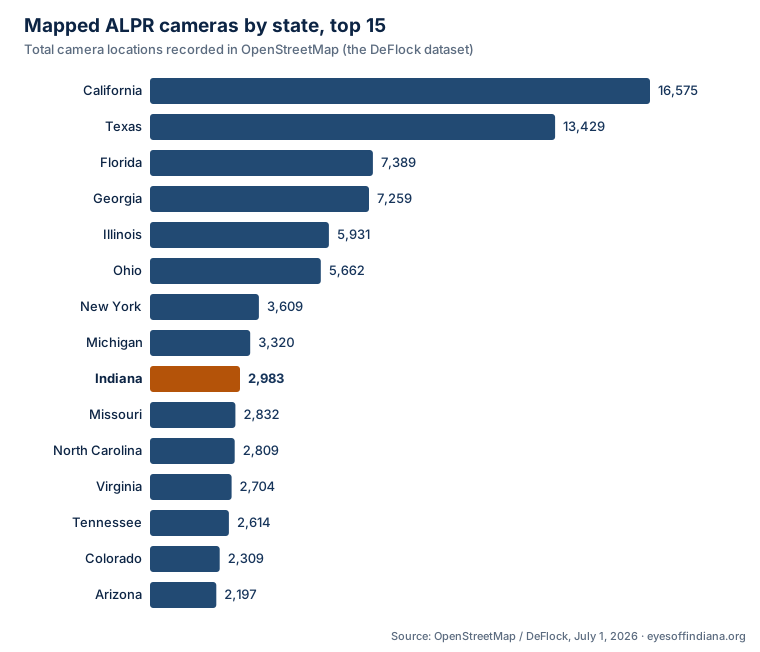
Adjusting for population sharpens the picture. Georgia — home of ALPR vendor Flock Safety — leads the nation at 64.9 cameras per 100,000 residents, followed by Kansas (59.4), Ohio (47.6), Illinois (46.7), and Missouri (45.3). Indiana is 6th at 43.1 per 100,000 — about 34% above the national rate of 32.1. Every neighboring state except Michigan also ranks in the per-capita top 20, placing the lower Midwest among the most densely ALPR-covered regions in the country relative to population.
By land-area density, small urbanized states dominate — Rhode Island (240.8 per 1,000 sq mi), New Jersey (179.2), and Delaware (179.1) — while Indiana ranks 11th at 83.3, nearly triple the national rate of 30.9. The complete 50-state table appears in Appendix A.
4. Indiana County Results
Mapped ALPR cameras are documented in 84 of Indiana's 92 counties. The distribution follows population — Marion County's 509 cameras lead the state, and the five most-camera'd counties (Marion, Hamilton, Lake, Allen, St. Joseph) hold 38% of the state total — but the technology is no longer an urban phenomenon. The median Indiana county has 14–15 mapped cameras, and 26 counties record 20 or more.
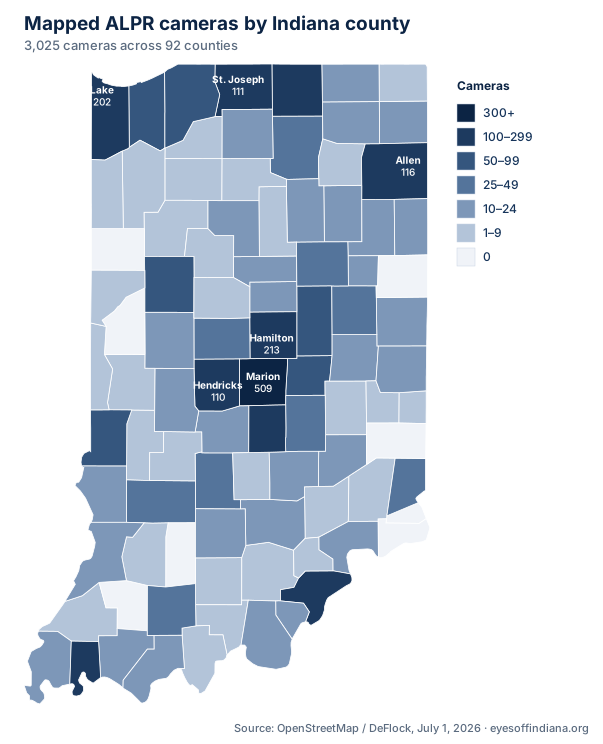
Table 2. Top 15 Indiana counties by mapped ALPR cameras
| Rank | County | Cameras | Population (2024) | Per 100 sq mi | (rank) | Per 10k residents | (rank) |
|---|---|---|---|---|---|---|---|
| 1 | Marion | 509 | 981,628 | 128.5 | 1 | 5.2 | 23 |
| 2 | Hamilton | 213 | 379,704 | 54.0 | 2 | 5.6 | 20 |
| 3 | Lake | 202 | 502,955 | 40.5 | 4 | 4.0 | 40 |
| 4 | Allen | 116 | 399,295 | 17.7 | 12 | 2.9 | 57 |
| 5 | St. Joseph | 111 | 273,744 | 24.2 | 8 | 4.1 | 38 |
| 6 | Hendricks | 110 | 190,629 | 27.0 | 7 | 5.8 | 16 |
| 7 | Vanderburgh | 108 | 180,387 | 46.3 | 3 | 6.0 | 13 |
| 8 | Johnson | 105 | 170,614 | 32.8 | 5 | 6.2 | 12 |
| 9 | Clark | 104 | 127,479 | 27.9 | 6 | 8.2 | 5 |
| 10 | Elkhart | 101 | 207,436 | 21.8 | 10 | 4.9 | 26 |
| 11 | Porter | 99 | 175,860 | 23.7 | 9 | 5.6 | 19 |
| 12 | LaPorte | 78 | 111,348 | 13.0 | 15 | 7.0 | 8 |
| 13 | Madison | 77 | 134,222 | 17.0 | 13 | 5.7 | 17 |
| 14 | Tippecanoe | 59 | 191,650 | 11.8 | 18 | 3.1 | 53 |
| 15 | Hancock | 58 | 88,810 | 19.0 | 11 | 6.5 | 10 |
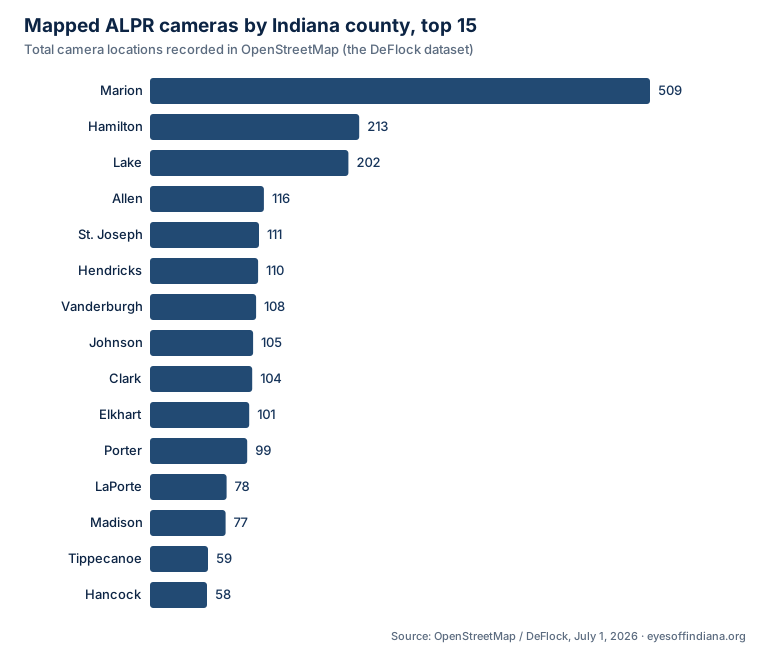
Per-capita rates tell a different story. Marion County, with by far the most cameras, ranks only 23rd per capita. The highest rates belong to small counties:
Table 3. Top 10 Indiana counties by mapped ALPR cameras per 10,000 residents
| Rank | County | Per 10k residents | Cameras | Population (2024) |
|---|---|---|---|---|
| 1 | Blackford | 11.0 | 13 | 11,816 |
| 2 | Tipton | 9.8 | 15 | 15,324 |
| 3 | Spencer | 8.4 | 17 | 20,192 |
| 4 | Greene | 8.3 | 26 | 31,219 |
| 5 | Clark | 8.2 | 104 | 127,479 |
| 6 | Sullivan | 7.7 | 16 | 20,768 |
| 7 | Dearborn | 7.2 | 37 | 51,435 |
| 8 | LaPorte | 7.0 | 78 | 111,348 |
| 9 | Randolph | 6.6 | 16 | 24,337 |
| 10 | Hancock | 6.5 | 58 | 88,810 |
Blackford County — population 11,816 — records 13 mapped cameras, a per-capita rate more than double the state average and higher than any of Indiana's metropolitan counties. Rural residents of Blackford, Tipton, Spencer, Greene, and Sullivan counties pass a mapped ALPR camera at rates their counterparts in Indianapolis, Fort Wayne, and Bloomington do not approach. Monroe County (Bloomington), which ended its Flock contract in 2025, ranks 70th per capita.
Eight counties — Benton, Fountain, Franklin, Jay, Martin, Ohio, Pike, and Switzerland — have no mapped cameras. As discussed under Limitations, this may reflect an absence of cameras or an absence of volunteer mapping coverage.
The complete 92-county table appears in Appendix B.
5. Discussion
Three patterns in these data bear on Indiana's policy debate:
Indiana is an outlier, not a bystander. Indiana hosts more mapped ALPR cameras than New York or Pennsylvania — states with roughly double and triple its population. Whatever is driving ALPR adoption, Indiana is adopting faster than nearly every other state relative to its size. A state near the top of the national distribution has a correspondingly strong interest in rules governing the technology.
Coverage is statewide, so policy must be statewide. With cameras documented in 84 of 92 counties and a median county count of 14–15, ALPR surveillance in Indiana cannot be dismissed as an Indianapolis issue. City-by-city ordinances and agency-by-agency policies leave most of the network — and most Hoosiers — outside any binding rule. Only statewide standards on retention, access, auditing, and sharing reach the network as it actually exists.
Small-county rates deserve scrutiny. The highest per-capita rates occur in counties with the fewest residents — and, typically, the smallest agencies, with the least capacity for auditing and oversight. A dozen cameras in a county of 12,000 people can log a large share of local daily travel, yet these are precisely the deployments least likely to attract press attention or formal policy.
6. Limitations
These figures measure mapped cameras, not all cameras. OpenStreetMap's ALPR coverage is maintained by volunteers, and DeFlock's own verification efforts suggest true camera counts exceed mapped counts in most places. Three consequences follow:
- All figures are floors, not ceilings. A county with zero mapped cameras may simply lack a volunteer who has mapped it.
- Comparisons may reflect mapping effort as well as deployment. States and counties with active contributor communities will rank higher, all else equal. Alaska's single mapped camera, for example, almost certainly understates its actual deployment.
- Counts change daily. OpenStreetMap is continuously edited; these figures are a snapshot taken July 1, 2026.
Additionally, camera coordinates were assigned using generalized Census cartographic boundaries; a small number of cameras near state lines and coastlines (0.8% nationally) could not be assigned and are excluded from state totals.
Appendix A. All 50 states, ranked by mapped ALPR cameras
| Rank | State | Cameras | Per 1,000 sq mi | (rank) | Per 100k residents | (rank) |
|---|---|---|---|---|---|---|
| 1 | California | 16,575 | 106.3 | 10 | 42.0 | 8 |
| 2 | Texas | 13,429 | 51.4 | 18 | 42.9 | 7 |
| 3 | Florida | 7,389 | 137.7 | 6 | 31.6 | 18 |
| 4 | Georgia | 7,259 | 125.8 | 7 | 64.9 | 1 |
| 5 | Illinois | 5,931 | 106.8 | 9 | 46.7 | 4 |
| 6 | Ohio | 5,662 | 138.6 | 5 | 47.6 | 3 |
| 7 | New York | 3,609 | 76.6 | 13 | 18.2 | 34 |
| 8 | Michigan | 3,320 | 58.6 | 16 | 32.7 | 16 |
| 9 | Indiana | 2,983 | 83.3 | 11 | 43.1 | 6 |
| 10 | Missouri | 2,832 | 41.2 | 22 | 45.3 | 5 |
| 11 | North Carolina | 2,809 | 57.8 | 17 | 25.4 | 25 |
| 12 | Virginia | 2,704 | 68.5 | 14 | 30.7 | 19 |
| 13 | Tennessee | 2,614 | 63.4 | 15 | 36.2 | 12 |
| 14 | Colorado | 2,309 | 22.3 | 27 | 38.8 | 11 |
| 15 | Arizona | 2,197 | 19.3 | 29 | 29.0 | 21 |
| 16 | Alabama | 2,090 | 41.3 | 21 | 40.5 | 9 |
| 17 | Wisconsin | 1,917 | 35.4 | 25 | 32.2 | 17 |
| 18 | Pennsylvania | 1,851 | 41.4 | 20 | 14.2 | 37 |
| 19 | Kansas | 1,763 | 21.6 | 28 | 59.3 | 2 |
| 20 | Washington | 1,763 | 26.5 | 26 | 22.2 | 31 |
| 21 | Louisiana | 1,563 | 36.2 | 24 | 34.0 | 13 |
| 22 | Kentucky | 1,543 | 39.1 | 23 | 33.6 | 14 |
| 23 | South Carolina | 1,476 | 49.1 | 19 | 26.9 | 22 |
| 24 | New Jersey | 1,318 | 179.2 | 2 | 13.9 | 38 |
| 25 | Minnesota | 1,290 | 16.2 | 31 | 22.3 | 30 |
| 26 | Oklahoma | 1,215 | 17.7 | 30 | 29.7 | 20 |
| 27 | Massachusetts | 932 | 119.5 | 8 | 13.1 | 40 |
| 28 | Utah | 913 | 11.1 | 35 | 26.1 | 24 |
| 29 | New Mexico | 830 | 6.8 | 38 | 39.0 | 10 |
| 30 | Connecticut | 824 | 170.2 | 4 | 22.4 | 28 |
| 31 | Arkansas | 822 | 15.8 | 32 | 26.6 | 23 |
| 32 | Maryland | 787 | 81.0 | 12 | 12.6 | 41 |
| 33 | Iowa | 784 | 14.0 | 34 | 24.2 | 26 |
| 34 | Mississippi | 687 | 14.6 | 33 | 23.3 | 27 |
| 35 | Nevada | 675 | 6.1 | 40 | 20.7 | 32 |
| 36 | Oregon | 442 | 4.6 | 42 | 10.3 | 42 |
| 37 | Nebraska | 402 | 5.2 | 41 | 20.0 | 33 |
| 38 | Delaware | 349 | 179.1 | 3 | 33.2 | 15 |
| 39 | Idaho | 293 | 3.5 | 43 | 14.6 | 36 |
| 40 | Rhode Island | 249 | 240.8 | 1 | 22.4 | 29 |
| 41 | West Virginia | 178 | 7.4 | 36 | 10.1 | 44 |
| 42 | North Dakota | 126 | 1.8 | 45 | 15.8 | 35 |
| 43 | South Dakota | 124 | 1.6 | 47 | 13.4 | 39 |
| 44 | New Hampshire | 66 | 7.4 | 37 | 4.7 | 45 |
| 45 | Wyoming | 60 | 0.6 | 48 | 10.2 | 43 |
| 46 | Maine | 51 | 1.7 | 46 | 3.6 | 48 |
| 47 | Montana | 45 | 0.3 | 49 | 4.0 | 46 |
| 48 | Hawaii | 43 | 6.7 | 39 | 3.0 | 49 |
| 49 | Vermont | 24 | 2.6 | 44 | 3.7 | 47 |
| 50 | Alaska | 1 | 0.0 | 50 | 0.1 | 50 |
District of Columbia (118 cameras) and Puerto Rico (50) are tabulated separately and excluded from the 50-state ranking.
Appendix B. All 92 Indiana counties, ranked by mapped ALPR cameras
| Rank | County | Cameras | Population (2024) | Per 100 sq mi | (rank) | Per 10k residents | (rank) |
|---|---|---|---|---|---|---|---|
| 1 | Marion | 509 | 981,628 | 128.5 | 1 | 5.2 | 23 |
| 2 | Hamilton | 213 | 379,704 | 54.0 | 2 | 5.6 | 20 |
| 3 | Lake | 202 | 502,955 | 40.5 | 4 | 4.0 | 40 |
| 4 | Allen | 116 | 399,295 | 17.7 | 12 | 2.9 | 57 |
| 5 | St. Joseph | 111 | 273,744 | 24.2 | 8 | 4.1 | 38 |
| 6 | Hendricks | 110 | 190,629 | 27.0 | 7 | 5.8 | 16 |
| 7 | Vanderburgh | 108 | 180,387 | 46.3 | 3 | 6.0 | 13 |
| 8 | Johnson | 105 | 170,614 | 32.8 | 5 | 6.2 | 12 |
| 9 | Clark | 104 | 127,479 | 27.9 | 6 | 8.2 | 5 |
| 10 | Elkhart | 101 | 207,436 | 21.8 | 10 | 4.9 | 26 |
| 11 | Porter | 99 | 175,860 | 23.7 | 9 | 5.6 | 19 |
| 12 | LaPorte | 78 | 111,348 | 13.0 | 15 | 7.0 | 8 |
| 13 | Madison | 77 | 134,222 | 17.0 | 13 | 5.7 | 17 |
| 14 | Tippecanoe | 59 | 191,650 | 11.8 | 18 | 3.1 | 53 |
| 15 | Hancock | 58 | 88,810 | 19.0 | 11 | 6.5 | 10 |
| 16 | Vigo | 52 | 106,166 | 12.9 | 16 | 4.9 | 25 |
| 17 | Boone | 45 | 78,773 | 10.6 | 19 | 5.7 | 18 |
| 18 | Delaware | 39 | 112,951 | 9.9 | 20 | 3.5 | 48 |
| 19 | Kosciusko | 38 | 80,669 | 7.2 | 23 | 4.7 | 28 |
| 20 | Dearborn | 37 | 51,435 | 12.1 | 17 | 7.2 | 7 |
| 21 | Grant | 30 | 66,458 | 7.2 | 22 | 4.5 | 32 |
| 22 | Dubois | 28 | 43,629 | 6.6 | 26 | 6.4 | 11 |
| 23 | Greene | 26 | 31,219 | 4.8 | 35 | 8.3 | 4 |
| 24 | Monroe | 26 | 140,702 | 6.6 | 25 | 1.8 | 70 |
| 25 | Shelby | 25 | 45,654 | 6.1 | 27 | 5.5 | 22 |
| 26 | Bartholomew | 23 | 84,741 | 5.7 | 30 | 2.7 | 59 |
| 27 | Floyd | 23 | 81,931 | 15.5 | 14 | 2.8 | 58 |
| 28 | Henry | 23 | 49,081 | 5.9 | 28 | 4.7 | 29 |
| 29 | Noble | 21 | 47,811 | 5.1 | 32 | 4.4 | 33 |
| 30 | Warrick | 21 | 66,339 | 5.5 | 31 | 3.2 | 52 |
| 31 | Howard | 20 | 84,082 | 6.8 | 24 | 2.4 | 67 |
| 32 | Jackson | 20 | 47,420 | 3.9 | 42 | 4.2 | 36 |
| 33 | Knox | 20 | 35,872 | 3.9 | 43 | 5.6 | 21 |
| 34 | Marshall | 20 | 46,464 | 4.5 | 36 | 4.3 | 35 |
| 35 | Morgan | 20 | 73,825 | 5.0 | 34 | 2.7 | 60 |
| 36 | Wabash | 18 | 30,777 | 4.4 | 39 | 5.8 | 15 |
| 37 | Adams | 17 | 36,584 | 5.0 | 33 | 4.6 | 30 |
| 38 | Huntington | 17 | 36,944 | 4.4 | 37 | 4.6 | 31 |
| 39 | Spencer | 17 | 20,192 | 4.3 | 40 | 8.4 | 3 |
| 40 | Wayne | 17 | 66,410 | 4.2 | 41 | 2.6 | 63 |
| 41 | DeKalb | 16 | 44,330 | 4.4 | 38 | 3.6 | 47 |
| 42 | Randolph | 16 | 24,337 | 3.5 | 45 | 6.6 | 9 |
| 43 | Sullivan | 16 | 20,768 | 3.6 | 44 | 7.7 | 6 |
| 44 | Lawrence | 15 | 45,192 | 3.3 | 46 | 3.3 | 49 |
| 45 | Putnam | 15 | 37,804 | 3.1 | 50 | 4.0 | 41 |
| 46 | Tipton | 15 | 15,324 | 5.8 | 29 | 9.8 | 2 |
| 47 | Montgomery | 14 | 38,633 | 2.8 | 52 | 3.6 | 46 |
| 48 | Blackford | 13 | 11,816 | 7.9 | 21 | 11.0 | 1 |
| 49 | Harrison | 13 | 39,978 | 2.7 | 54 | 3.3 | 50 |
| 50 | Jefferson | 12 | 32,921 | 3.3 | 47 | 3.6 | 45 |
| 51 | LaGrange | 12 | 41,122 | 3.2 | 49 | 2.9 | 56 |
| 52 | Wells | 12 | 28,798 | 3.3 | 48 | 4.2 | 37 |
| 53 | Posey | 11 | 25,067 | 2.7 | 53 | 4.4 | 34 |
| 54 | Cass | 10 | 37,559 | 2.4 | 56 | 2.7 | 61 |
| 55 | Decatur | 10 | 26,421 | 2.7 | 55 | 3.8 | 44 |
| 56 | Miami | 9 | 35,613 | 2.4 | 57 | 2.5 | 64 |
| 57 | Starke | 9 | 23,463 | 2.9 | 51 | 3.8 | 42 |
| 58 | Newton | 7 | 14,131 | 1.7 | 63 | 5.0 | 24 |
| 59 | Steuben | 7 | 34,862 | 2.3 | 58 | 2.0 | 68 |
| 60 | Whitley | 7 | 34,885 | 2.1 | 60 | 2.0 | 69 |
| 61 | Brown | 6 | 15,650 | 1.9 | 62 | 3.8 | 43 |
| 62 | Fulton | 6 | 20,004 | 1.6 | 65 | 3.0 | 55 |
| 63 | Orange | 6 | 19,824 | 1.5 | 66 | 3.0 | 54 |
| 64 | White | 6 | 24,833 | 1.2 | 69 | 2.4 | 66 |
| 65 | Crawford | 5 | 10,523 | 1.6 | 64 | 4.8 | 27 |
| 66 | Perry | 5 | 19,320 | 1.3 | 68 | 2.6 | 62 |
| 67 | Pulaski | 5 | 12,421 | 1.2 | 70 | 4.0 | 39 |
| 68 | Vermillion | 5 | 15,516 | 1.9 | 61 | 3.2 | 51 |
| 69 | Warren | 5 | 8,451 | 1.4 | 67 | 5.9 | 14 |
| 70 | Clinton | 4 | 32,895 | 1.0 | 73 | 1.2 | 78 |
| 71 | Gibson | 4 | 33,038 | 0.8 | 76 | 1.2 | 79 |
| 72 | Jennings | 4 | 27,634 | 1.1 | 71 | 1.4 | 75 |
| 73 | Owen | 4 | 21,851 | 1.0 | 72 | 1.8 | 71 |
| 74 | Parke | 4 | 16,508 | 0.9 | 75 | 2.4 | 65 |
| 75 | Scott | 4 | 24,751 | 2.1 | 59 | 1.6 | 73 |
| 76 | Washington | 4 | 28,345 | 0.8 | 78 | 1.4 | 77 |
| 77 | Carroll | 3 | 20,747 | 0.8 | 77 | 1.4 | 76 |
| 78 | Jasper | 3 | 33,387 | 0.5 | 81 | 0.9 | 80 |
| 79 | Rush | 3 | 16,759 | 0.7 | 79 | 1.8 | 72 |
| 80 | Daviess | 2 | 34,097 | 0.5 | 82 | 0.6 | 82 |
| 81 | Fayette | 2 | 23,335 | 0.9 | 74 | 0.9 | 81 |
| 82 | Clay | 1 | 26,424 | 0.3 | 83 | 0.4 | 83 |
| 83 | Ripley | 1 | 29,214 | 0.2 | 84 | 0.3 | 84 |
| 84 | Union | 1 | 6,884 | 0.6 | 80 | 1.5 | 74 |
| 85 | Benton | 0 | 8,853 | 0.0 | — | 0.0 | — |
| 86 | Fountain | 0 | 16,833 | 0.0 | — | 0.0 | — |
| 87 | Franklin | 0 | 23,136 | 0.0 | — | 0.0 | — |
| 88 | Jay | 0 | 20,164 | 0.0 | — | 0.0 | — |
| 89 | Martin | 0 | 9,864 | 0.0 | — | 0.0 | — |
| 90 | Ohio | 0 | 5,996 | 0.0 | — | 0.0 | — |
| 91 | Pike | 0 | 12,116 | 0.0 | — | 0.0 | — |
| 92 | Switzerland | 0 | 9,988 | 0.0 | — | 0.0 | — |
Counties with zero mapped cameras are listed alphabetically; rate rankings are not meaningful at zero.
Data Availability
Camera locations: OpenStreetMap contributors, retrieved via the Overpass API (query: man_made=surveillance and surveillance:type=ALPR), July 1, 2026, © OpenStreetMap contributors, ODbL. The same data may be explored interactively at DeFlock.me. Boundaries and denominators: US Census Bureau cartographic boundary files, 2024 national gazetteer, and Vintage 2024 population estimates. The complete state and county datasets (CSV/JSON) and analysis scripts are available from Eyes Off Indiana on request.
Suggested Citation
Eyes Off Indiana. Indiana by the Numbers: A 50-State, 92-County Census of License Plate Surveillance. July 1, 2026. https://eyesoffindiana.org/articles/indiana-alpr-surveillance-by-the-numbers
Indiana ranks near the top of the nation in license plate surveillance and near the bottom in rules governing it. If you believe a network of 3,000 cameras deserves statewide standards for retention, access, and oversight, sign the Eyes Off Indiana petition and contact your state representative.